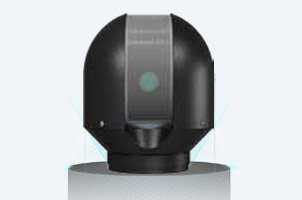
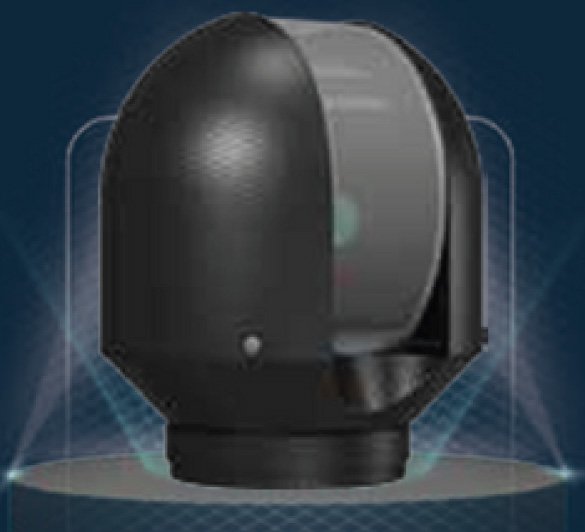
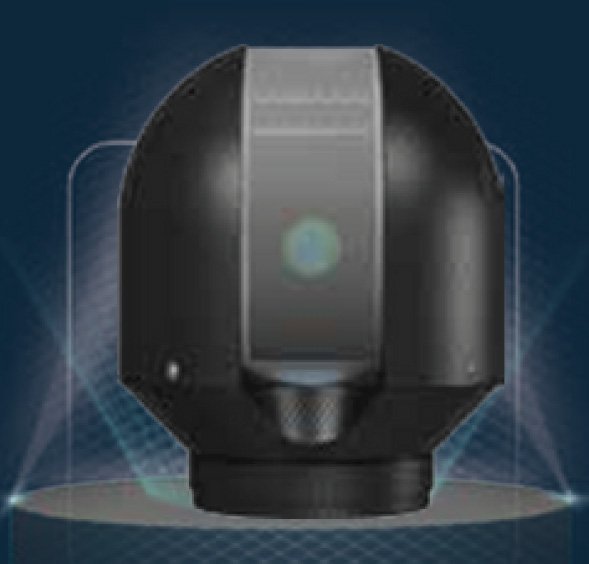
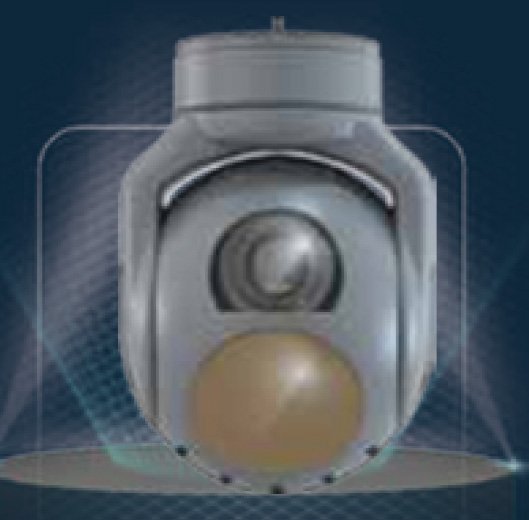
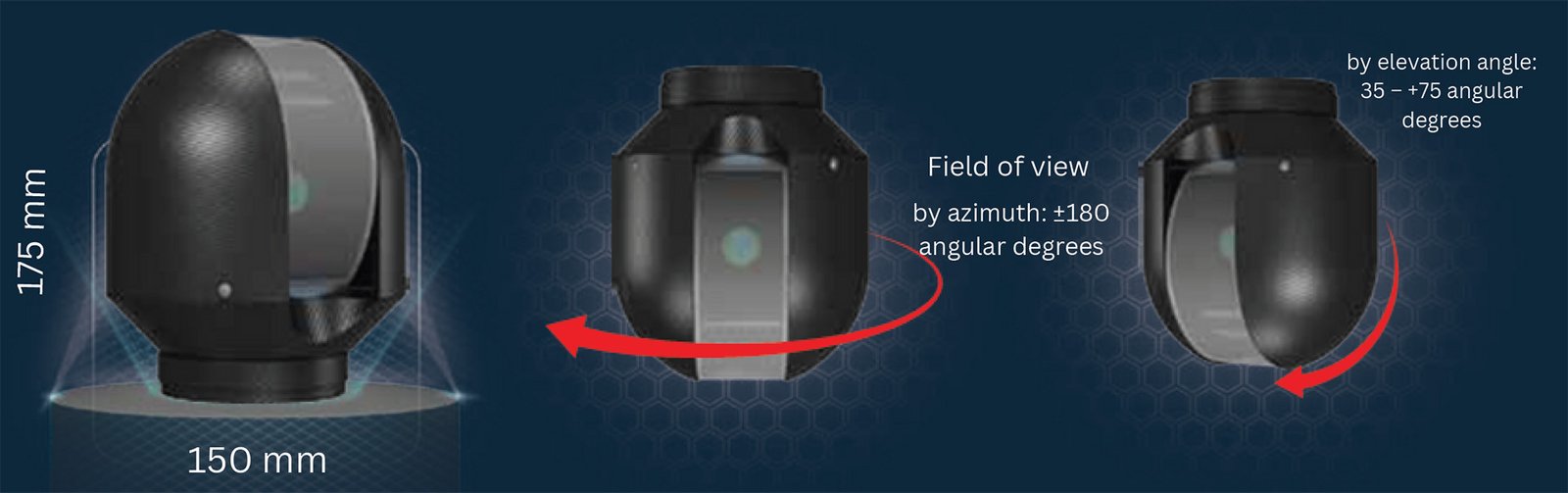
Karat produces a line of light optical – electronic systems Laggar for unmanned aerial
vehicles. The line includes devices installed on unmanned aircrafts, helicopters, aerostats and airships; they are designed for twenty – four – hour downward visibility (monitoring on – land and above – water objects) with television channels, thermal imaging channels and laser range finders.
Product Line
Laggar – D system with Gyrostabilized Television Channel.
Laggar – N System with Gyrostabilized Thermal Imaging Channel.
Laggar – DN Module System
The Laggar Systems Provide
Measuring and outputting the angular orientation of the sight axis by relative bearing and elevation
bearing.
Automatic tracking of on – land and above – water mobile objects and keeping them on the sight axis;
pointing the sight axis according to the external target designation (relative bearing and elevation bearing);.
Measuring the range up to the object.
Technical Specifications
Performance characteristics of the Laggar systems vision
devices
Maximum turning rate of the sight line is – 40 angular degrees/sec.
Accurate pointing and stabilization of the sight line towards the target is not worse than 1 angular minute.
Mean square error of angle coordinate measurements is not more than 1 angular minute.
According to customer requirements, devices of the Laggar – D and Laggar – N vision system can be configured with various (miniature) television and thermal imaging cameras. The Laggar – DN vision device is a module device and can be supplied with different sets of optical – elec tronic unit groups (TV cameras with various fields of view, infrared cameras, laser range finders). In
addition, the Laggar – DN system has an enhanced gyroplatform with optical – electronic unit groups to make it possible to install the system on unmanned aerial vehicles of helicopter type.
All – round view provided by the vision devices is supplemented with digital filtration system for better image quality under adverse weather conditions (haze, fog, rain, dusk, etc.).
System Functions
The main functions of the Laggar systems include:
Detection of above – water and on – land objects under day – time and night – time
conditions; identification of detected objects.
Providing search and rescue operations environment monitoring.
Forming and outputting target designations.
Detecting and monitoring of technogenic or natural RWI.